Case study: Multi-tenant SaaS
A multi-tenant AI form builder SaaS
A B2B form platform with natural-language form generation, a drag-and-drop builder, company workspaces with plan limits, approvals and analytics.
- Client
- A B2B software client, name withheld
- My role
- Lead engineer, discovery through go-live
- Engagement
- Delivered through Torch Solutions
I worked on this as a Senior Software Engineer at Torch Solutions, the engineering firm contracted by the client. The product belongs to the client.
Project overview
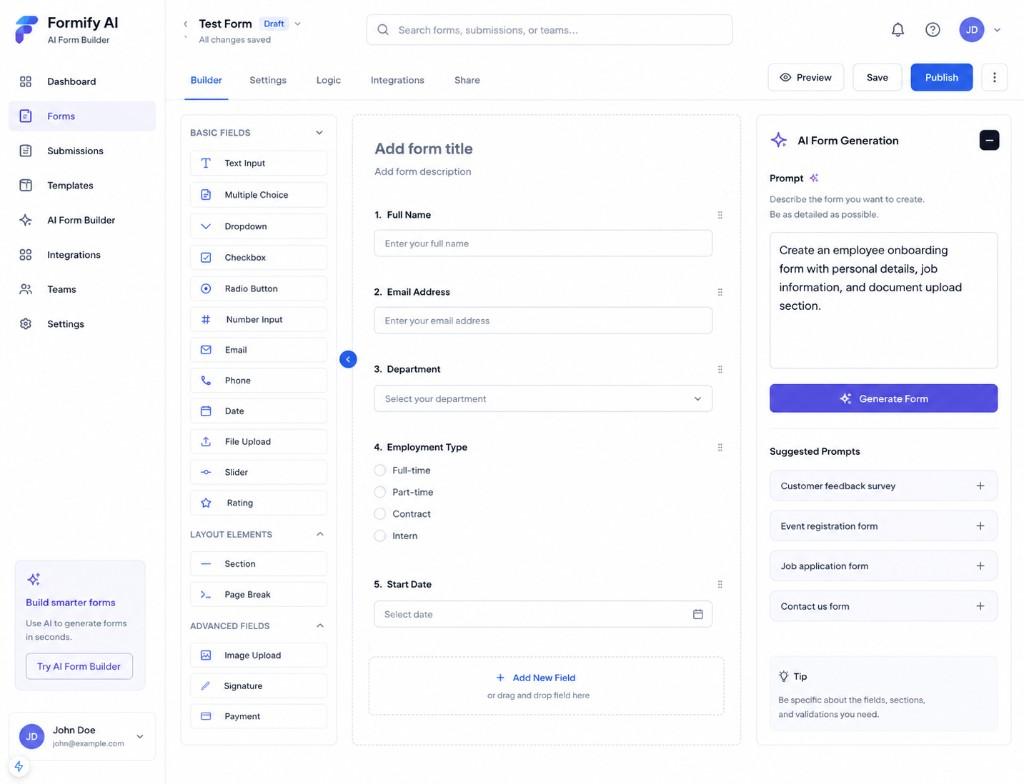
The form builder lets a team describe a form in plain language, get a working draft, and refine it in a drag-and-drop builder before publishing.
I owned the build from requirements through architecture, implementation and go-live, and handed over a product the client could run without me.
The business problem
Teams wait on engineering tickets for forms, and one-shot AI generators produce a blob nobody can edit. A sellable product needs more than either.
AI output has to be editable
Generated fields must land in a real builder as typed components a person can change.
Companies need isolation and limits
Separate workspaces, roles and plan quotas are what make a form tool a business.
Publishing needs review
Collaboration requires approval and comments before a form goes live.
Usage has to be measurable
Quotas and product metrics both depend on a reliable record of events.
My role and responsibilities
End-to-end ownership of the product build.
- Turned ambiguous requirements into personas, an activation funnel and phased delivery slices
- Designed tenancy, the field schema, the AI generation pipeline and analytics events
- Built the Next.js application and the Django API
- Prepared environments, migrations and deployment, and completed the client handover
Technical challenges
Reliable structured output from a language model
The model has to return fields that exist in the product's widget catalog, with valid options for choice fields, every time.
A flexible field schema that still persists cleanly
Around twenty widget types with their own options, ordering, bulk creation and incremental saves.
One authoring loop
Drag-and-drop, AI insert and unsaved-change guards have to behave as a single editor.
Plan gates without a rewrite later
Role, company and plan status need to be enforced at the API and reflected immediately in the interface.
Solution and implementation
A multi-tenant SaaS where AI accelerates authoring and every generated field stays reviewable and editable.
AI form generation
- A multi-step pipeline: prompt, theme, field schema, preview, then insert into the builder
- Field types constrained to the product's catalog, with templates for choice-field options
- A sandboxed preview before anything is inserted
Drag-and-drop builder
- Around twenty widget types across inputs, choices, media and layout
- Per-field styling options and a draft, published, archived lifecycle
- Bulk creation for new fields and incremental updates for changed ones
Workspaces and plans
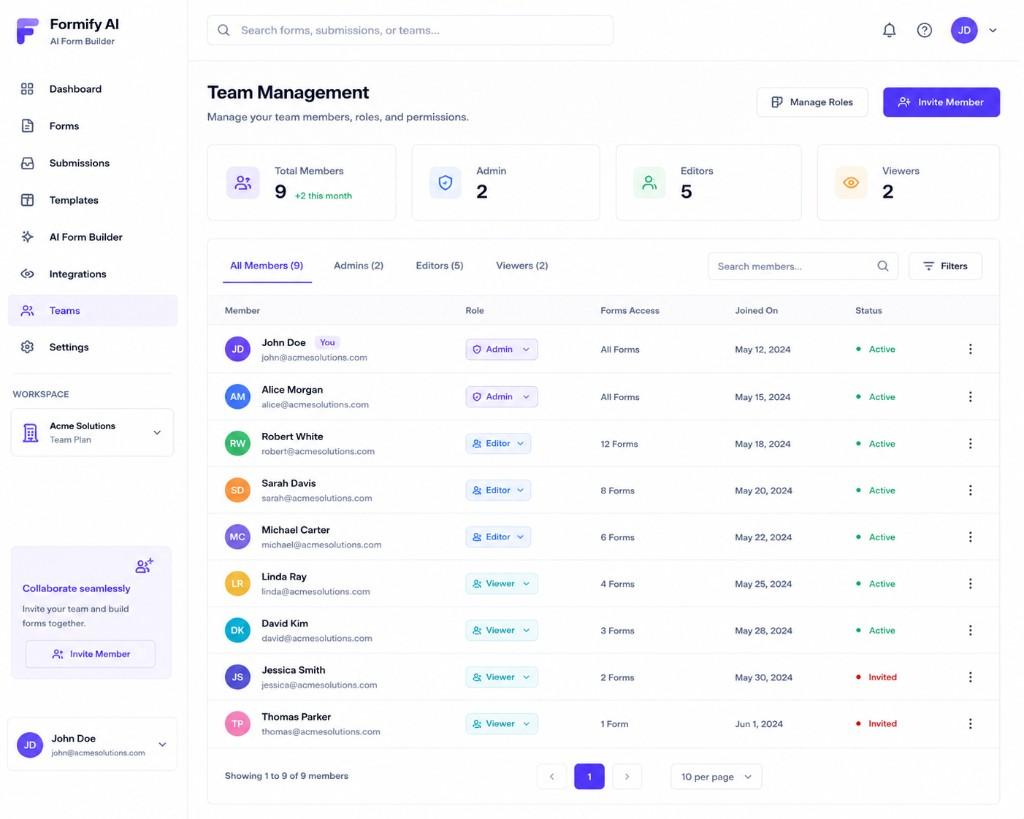
- The company workspace is the tenant boundary for users, forms and analytics
- Owner, manager and employee roles, with email invitations
- Plan limits for users, forms, submissions and fields, carried in JWT claims
Approvals and analytics
- An approvals list with live preview and comment threads
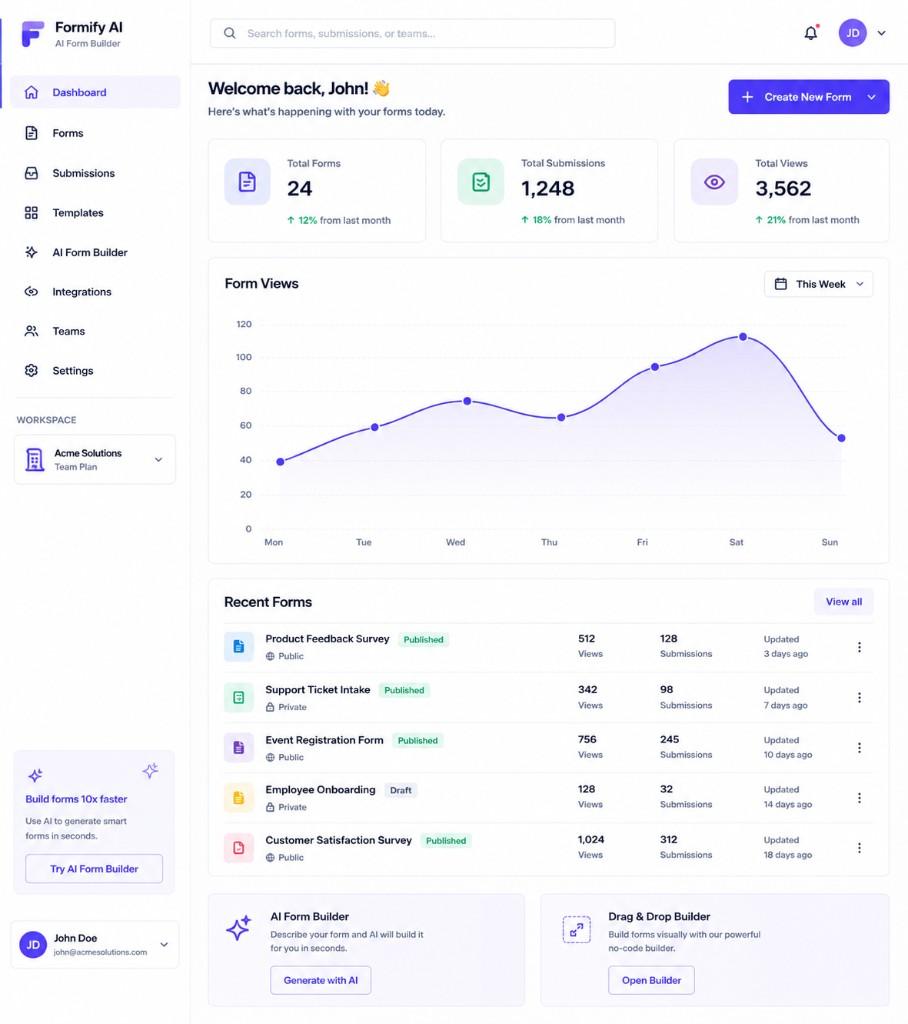
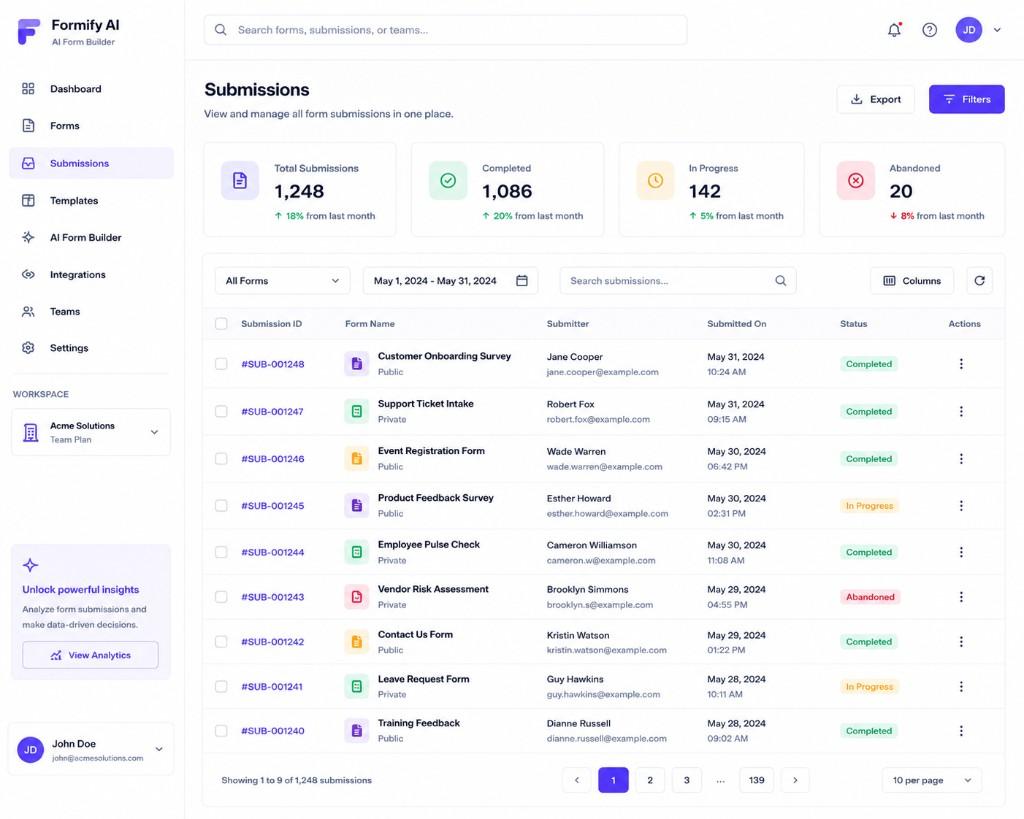
- A company event log for quotas and product metrics, plus per-form counters
Technology stack
- Frontend
- Next.js, React, TypeScript, Tailwind CSS, Zustand, TanStack Query, react-dnd
- Mobile
- Expo (React Native) for submissions
- Backend
- Django, Django REST Framework, SimpleJWT
- AI
- OpenAI SDK
- Data
- PostgreSQL
- Delivery
- Docker, environment-based configuration
Outcomes
Only results that are documented are listed here.
- Delivered on schedule with a complete client handover
- AI generation that inserts editable, catalog-valid fields into a real builder
- Tenancy with roles and plan limits enforced at the API
- Approvals and analytics that make collaboration and usage measurable
Lessons learned
- Constrain the model to your product's vocabulary. A fixed catalog turns unreliable output into a validation problem.
- Show generated work before committing it. A preview step is cheap and removes most of the distrust.
- Build tenancy and plan limits into the first version. They shape the data model too much to add later.
Related services
- AI Product Development: Taking an AI product from idea or prototype to production-ready software: architecture, backend, frontend, integrations, testing and deployment.
More case studies
Working on something similar?
If your product has the same kind of constraints, I am glad to talk through how I would approach it.
Or email sarmadkhalique001@gmail.com